
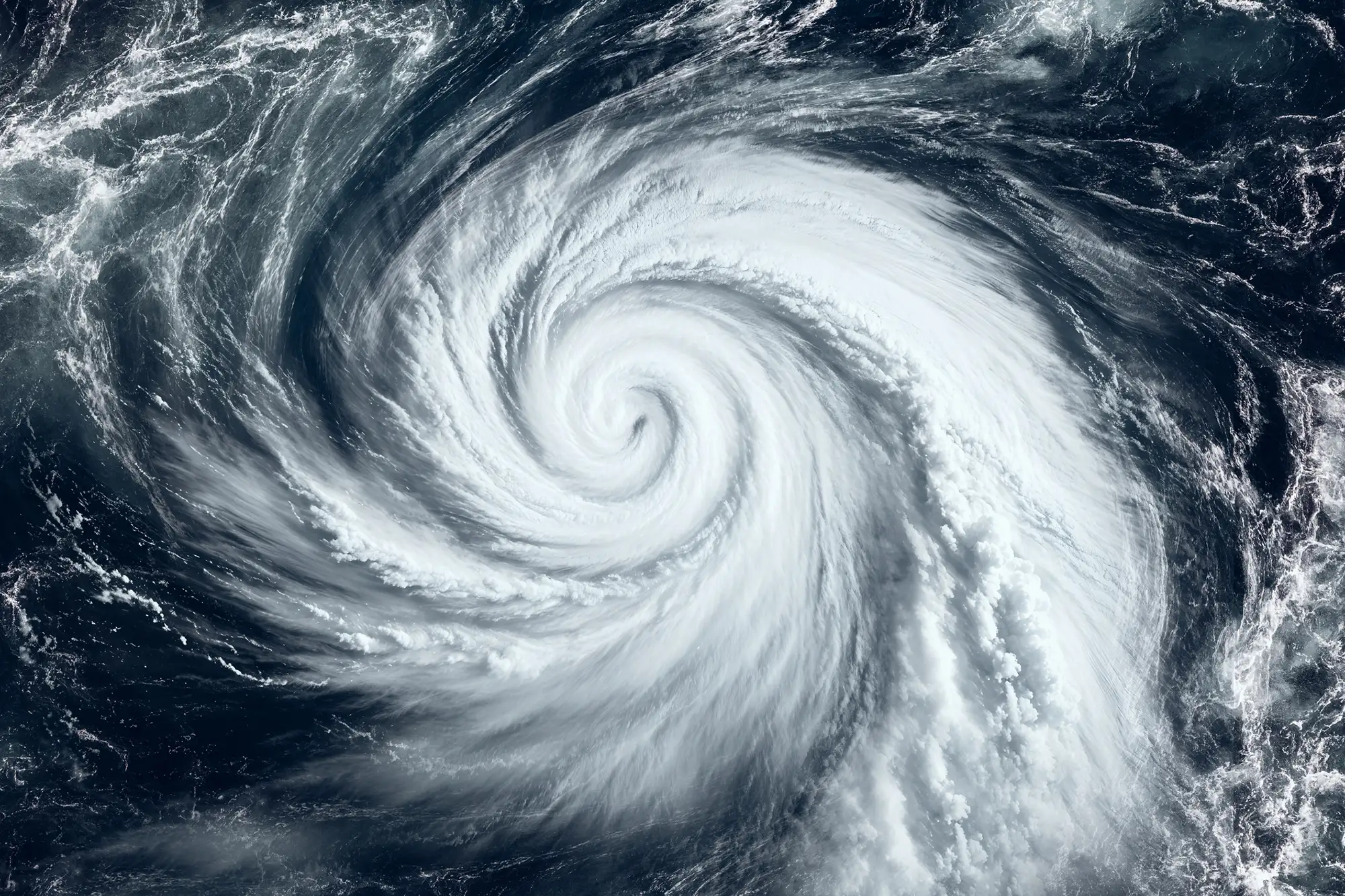
The frequency of significant weather events has measurably increased. NOAA's National Centers for Environmental Information tracks billion-dollar weather and climate disasters in the United States. The data shows a clear trend: more events, more frequently, over the past two decades.
Source: NOAA NCEI, Billion-Dollar Weather and Climate Disasters,updated 2026
The IPCC's climate projections reinforce this pattern globally: intensification of extreme weather events across flood, wildfire, hurricane, and wind categories.The trend affects every geography. The Southwest faces intensified wildfire exposure. The Gulf Coast and Southeast face hurricane frequency and intensity increases. The Midwest faces more severe flooding. The Pacific Northwest faces both.
Commercial buildings permitted today will be standing through these events for 100 years or more. The design decisions made this year have consequences across that entire period.
Building codes are life-safety standards. The International Building Code, the NFPA fire codes, and the structural design standards they reference are designed with one primary objective: ensure that building occupants can escape safely.
This is the right objective for a code. It saves lives. But it doesn't address a different question that is becoming increasingly important to building owners,insurers, lenders, and the communities these buildings serve.
What does the building do after the event? Not just during it.
A structurally sound building that is unavailable for six months because of smoke damage, ember infiltration, or broken utility systems doesn't serve its tenants. When Foodland Farms' Lahaina grocery store survived the 2023 fire structurally intact, it was still closed for eight months while electricity and water were restored. The community went without local grocery access for most of that period. Not because the building failed structurally, but because operational continuity requires more than structural integrity.
Source: Foodland press release, April 2024 reopening
Fort McMurray in 2016 tells the same story from a different angle. The evacuation of90,000 people was the headline. What received less coverage was that restoring grocery stores, banks, pharmacies, and gas stations was the prerequisite for residential re-entry. Community recovery speed is determined by critical commercial infrastructure availability. Not just residential rebuilding.
Source: First Onsite restoration documentation, Fort McMurray2016 recovery
Post-fire research from the Insurance Institute for Business & Home Safety and NFPA consistently finds that most structure losses in wildland-urban interface fire events begin not from a direct flame front, but from wind-driven embers that land on and infiltrate vulnerable parts of the building envelope.
The primary vulnerabilities are predictable: roof vents, eave openings,wall-to-roof joints, non-tempered glazing, combustible decking. A building with a monolithic concrete exterior eliminates most of these pathways entirely.There are no vents, no eave overhangs, no combustible exterior framing for embers to ignite.
RSG3-D delivers a concrete envelope on both faces of the wall assembly, with a minimum 2-hour fire rating per ICC-ES ESR-2435 Table 1. The wire truss structural system, tested as Group A in the TCA's research program at University of Nebraska Lincoln , provides the composite structural performance of solid concrete walls, without the weight or material volume.
Source: ICC-ES ESR-2435 Table 1, fire ratings by wythe thickness; TCA Research Report, University of Nebraska Lincoln
The insurance market for properties in high-exposure areas , wildfire interface zones, hurricane corridors, high-seismic regions , is contracting. Carriers are withdrawing from some markets. Premiums are rising significantly in others.Buildings with documented resilience credentials are increasingly differentiated in underwriting conversations.
On the lending side, ESG underwriting frameworks are beginning to incorporate building envelope performance metrics. For institutional owners accessing certain capital markets, this will increasingly affect financing terms.
The resilience conversation is shifting from a sustainability aspiration to a financial reality. The buildings that can document their performance characteristics, fire ratings, seismic categories, structural validation , are better positioned in both insurance and lending conversations than those that cannot.
RSG 3-D covers seismic design categories C through F under ASCE 7. No RSG structure has sustained structural damage from hurricane, cyclone, earthquake, or flood in 30 years of deployment across 20-plus countries.
Source: ICC-ES ESR-2435 Section 4.1.5; RSG company records
Wall specification is a day-one decision for a building that will stand through multiple decades of increasingly frequent extreme weather events. The code minimum is a starting point, not a ceiling.
ICC-ES ESR-2435 is available at icc-es.org, active to April 2027. It covers IBC 2009 through 2024, with supplements for California,City of LA, and Florida. Contact RSG at rsg3d.com to discuss your project.